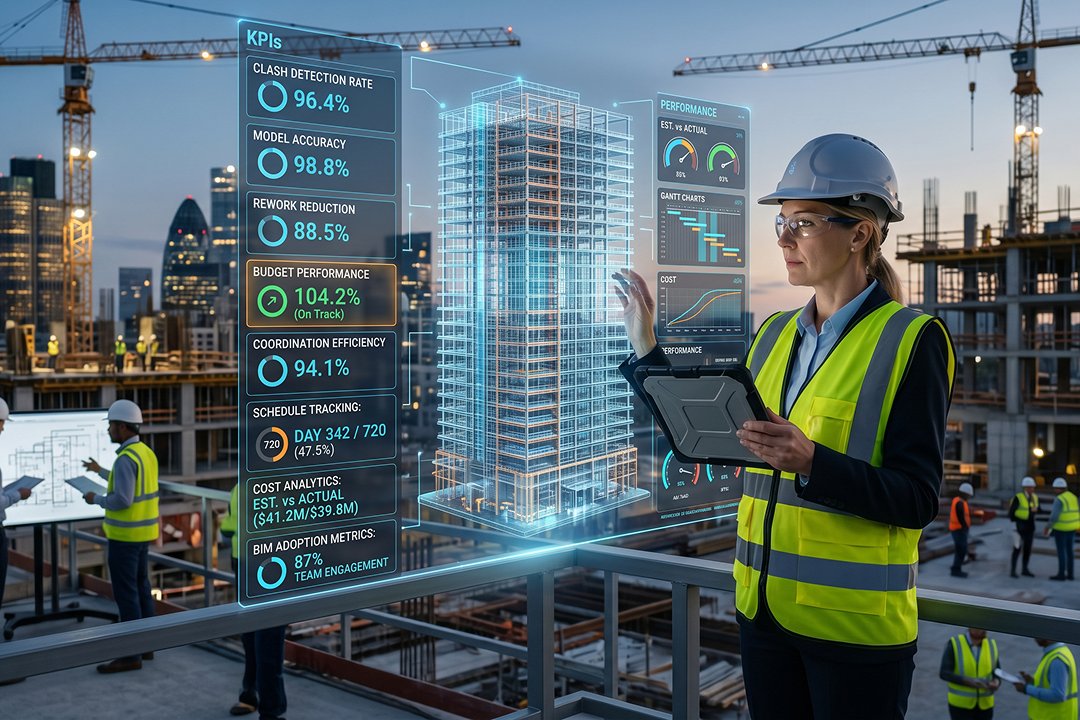
Management of construction projects is no longer limited to budget control or meeting deadlines. Project managers today have to deal with complex tasks of managing workflows to ensure seamless team coordination and reduce project risks. Lack of project performance visibility can lead to coordination issues resulting in delays, rework, or increased costs.
This highlights the importance of choosing BIM services for streamlining the overall project lifecycle. BIM benefits project teams with improved collaboration and supports better decisions through data-inclined workflows.
But, only focusing on BIM implementation will not work. It is important for project managers to keep a complete track of BIM KPIs. This helps in performance scaling and project success. So, let us check out the main BIM KPIs that you should know about.
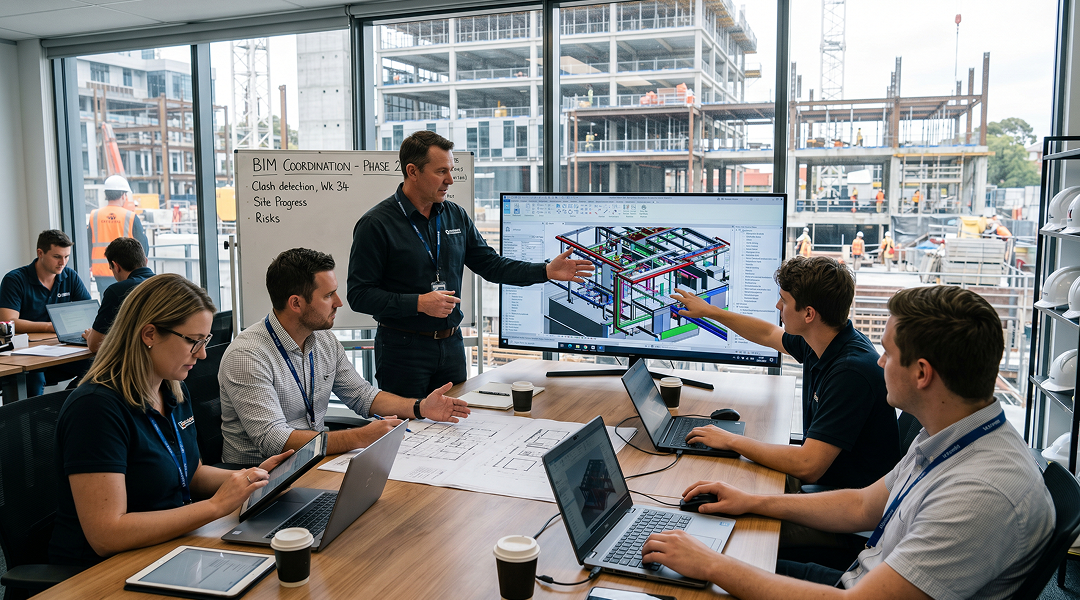
BIM KPIs or key performance indicators are metrics that measure the effectiveness of construction processes. The key indicators offer a clear idea about the project coordination, scheduling, issue resolution, cost control, and more.
The key metrics that BIM KPIs measure are:
● Clash detection efficiency
● Model accuracy
● Rework reduction
● Coordination performance
● Schedule and cost accuracy
● BIM adoption and ROI
Furthermore, for enhanced efficiency in terms of implementing KPI frameworks, firms today are using support from BIM experts. This enhances project transparency while maximizing the overall BIM performance.
Let us now find out the important KPIs that project managers should actively keep track of:
One key benefit of implementing BIM is to detect structural issues early, before actual construction. This Clash Detection Rate measures the number of conflicts that are being detected and resolved during the initial design phase.
Unresolved clashes lead to expensive delays, revisions, and material waste during construction.
● Number of clashes detected
● Number of clashes resolved
● Time taken to resolve clashes
● Frequency of recurring issues
● Reduced construction errors
● Lower rework costs
● Improved coordination between disciplines
A higher clash resolution rate is a clear sign of strong collaboration and efficient BIM coordination practices.
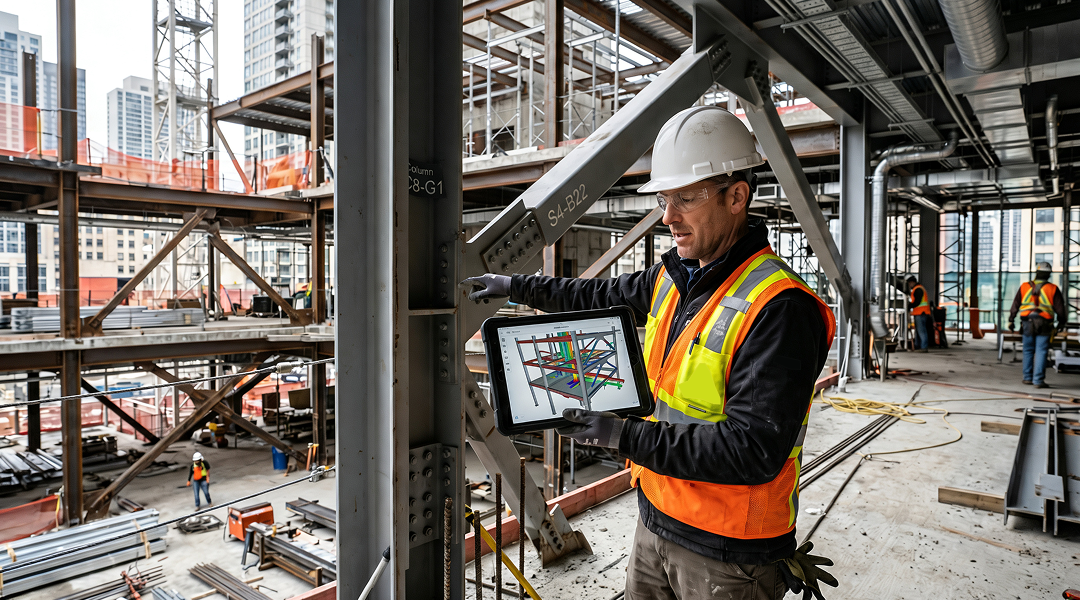
The quality of a BIM model has a direct impact on the success of a construction project. Cheaper models build confusion that eventually turns into miscommunication and execution errors.
● Percentage of model errors
● Compliance with BIM standards
● Level of detail (LOD) accuracy
● Model completeness rate
Maintaining accuracy in modeling assists stakeholders. This helps in better decision-making, reducing the risk of assumptions during construction.
Ensure to conduct regular audits of the model. This ensures consistency and compliance with project standards.
One of the costly mistakes that construction projects frequently encounter is rework. This is one of the hidden risks of not using BIM. It increases the chances of design inconsistencies, rework, budget overruns, or delays. BIM prevents rework by enhancing design coordination as well as visualization.
Rework Reduction % = ((Previous Rework Costs – Current Rework Costs) ÷ Previous Rework Costs) × 100
Reduced rework means:
● Better project efficiency
● Reduced material waste
● Improved profitability
● Faster project delivery
Keeping a track of KPI enables project managers to quantify the real-world impact of BIM on construction performance.
The common reason why the best BIM strategies fail is when teams are not using BIM workflows or tools.
● Percentage of team members using BIM tools
● Frequency of BIM software usage
● Department-wise BIM engagement
● Training completion rates
Higher adoption rates are a clear sign that the firm is integrating BIM into its daily operations.
Ensure to train your team, encouraging them to adopt BIM sooner.
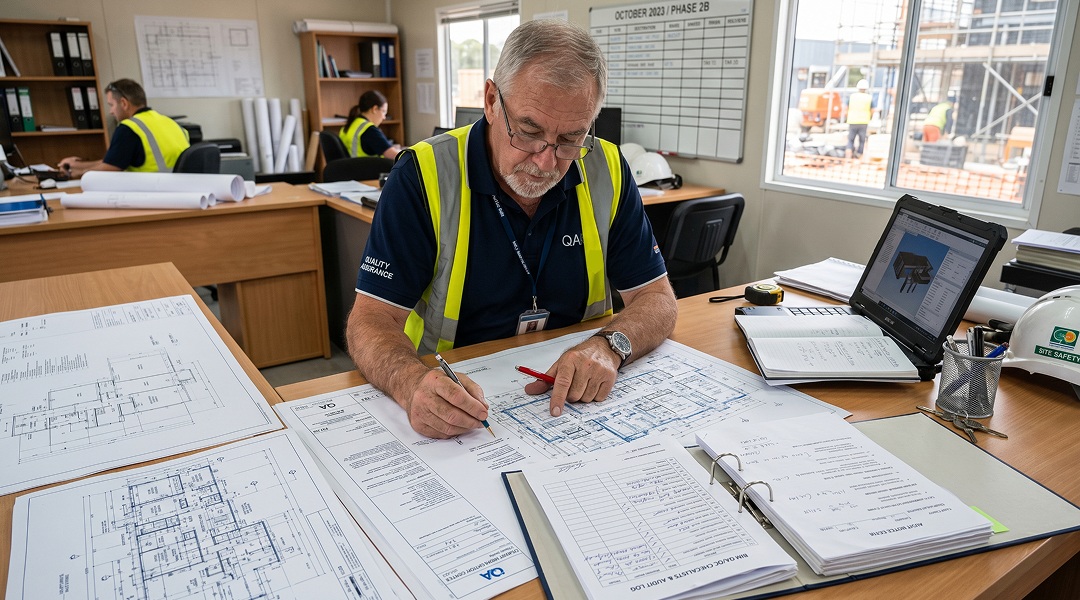
One of the main benefits of BIM adoption is its ability to enhance cost estimation and bring better budget control.
● Cost variance
● Budget accuracy percentage
● Quantity takeoff accuracy
● ROI from BIM implementation
Accurate cost tracking can help reduce financial risks besides enhancing project profitability.
BIM is basically all about collaboration. An organized workflow with the help of professional BIM coordination services can help scale how project stakeholders communicate and share information.
● Number of coordination meetings
● Response time for issue resolution
● Model sharing frequency
● Communication delays
● Faster decision-making
● Improved interdisciplinary collaboration
● Reduced misunderstandings
Efficient coordination minimizes delays and ensures smoother project execution.

A higher rate of RFIs is a clear sign of design clarity or issues with coordination.
● Number of RFIs generated
● RFI response time
● Reduction in RFIs over project phases
BIM improves visualization and data accuracy, which significantly reduces ambiguities that typically lead to RFIs.
Fewer RFIs lead to:
● Faster approvals
● Better communication
● Reduced project delays
Tracking the right BIM KPIs is essential for improving project performance, reducing risks, controlling costs, and enhancing collaboration. Organizations that consistently monitor BIM KPIs are better positioned to deliver projects on time, within budget, and with higher quality standards.
If you are looking to streamline your BIM workflows and improve project efficiency, Modelo Tech Studio offers innovative BIM solutions tailored to modern construction and design requirements. Contact us today to discuss your project requirements and discover how advanced BIM solutions can drive measurable success for your business!

Curious to dive deeper into BIM practices? Check out our related blog posts for more insights and strategies to elevate your projects!


.png)
We appreciate your interest in our services. To provide you with an accurate and comprehensive quote, we will need some general information about your project. This will help us understand your specific needs and tailor our proposal to meet your requirements effectively.
.png)