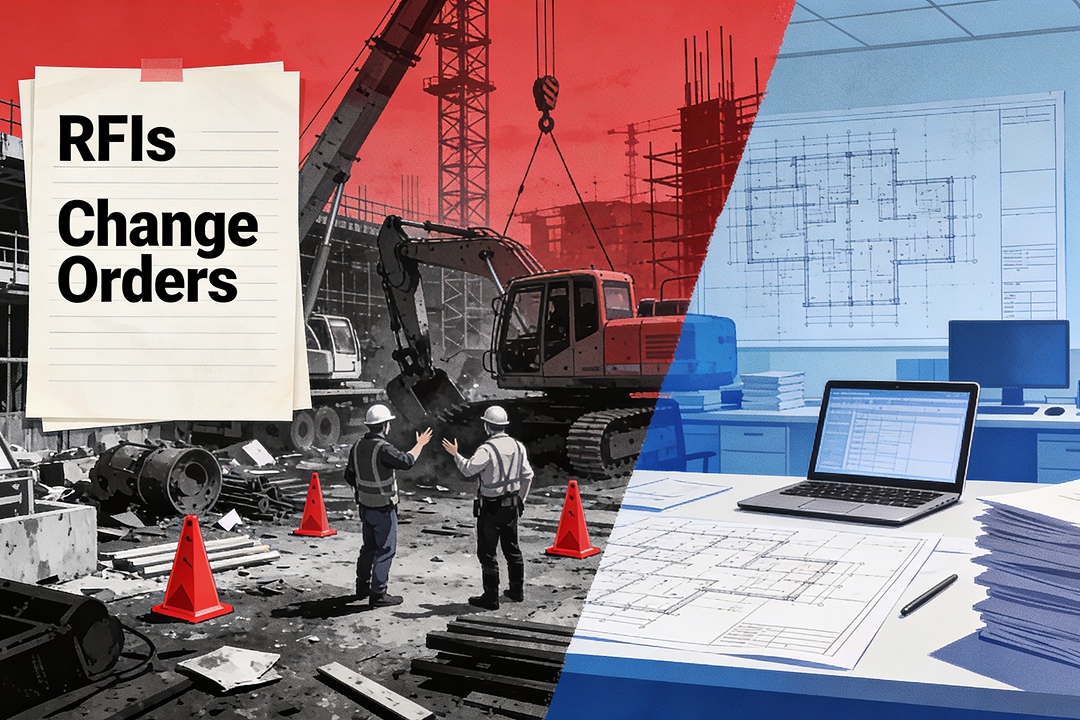
Information gaps prove costly in the construction industry, irrespective of whether you are managing a tenant improvement project or a hospital build. Two main pillars that derail momentum faster than anything else are RFIs and Change Orders. Both surfaces through uncertainties, and both cost time, money, as well as trust.
However, in the past decade, one significant process that has unveiled its ability to address these issues at the core is BIM coordination. It is not just about modeling. It is a disciplined, collaborative workflow using data-rich 3D models to identify issues sooner, long before they transition into field conflicts, scope changes, or rework.
In our post today, we will explore the benefits of professional BIM Coordination, its role in reducing RFIs and change orders, and the reasons behind its growing importance.
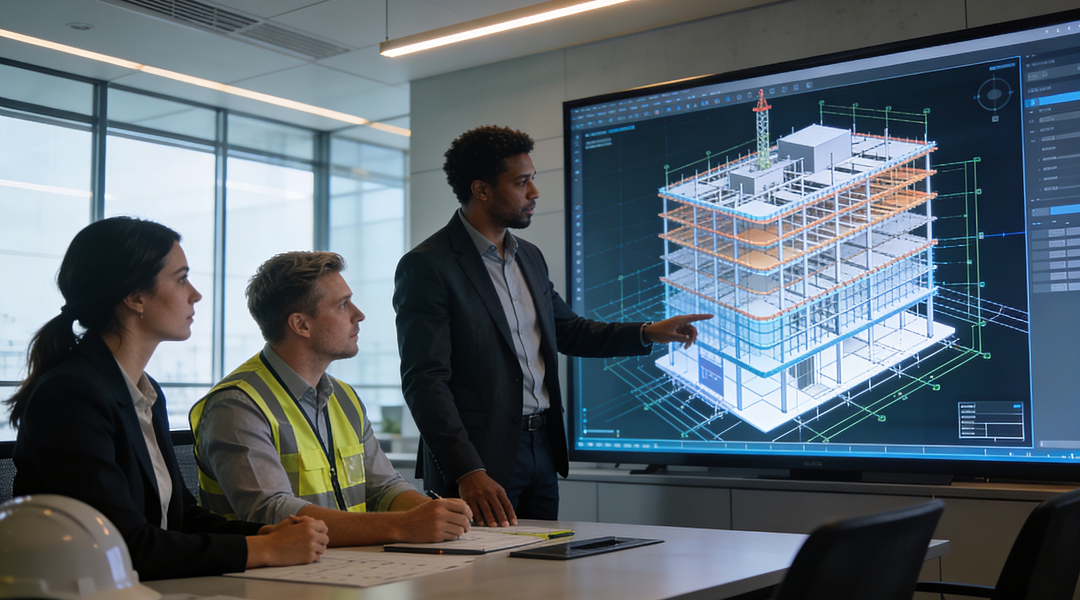
Before diving deeper into BIM's impact, let's look at RFIs and Change Orders.
An RFI is a formal request for clarification from a contractor or subcontractor regarding uncertain, conflicting, or missing contract documents or design information. Although RFIs are essential to project clarity, they may delay progress if they are repetitive or poorly managed.
A Change Order is a formal change to the original construction contract due to modifications in scope, errors in construction design, unforeseen conditions, or client requests. Change orders cause:
● An Increased cost
● Delays with the project schedule
● Reallocation of resources
Both RFIs and change orders stem from design clashes, inadequate documentation, or poor coordination among project stakeholders.
Building Information Modeling, or BIM, is the digital representation of a facility's functional or physical characteristics. BIM Coordination is the process of integrating models from different disciplines for identifying and resolving conflicts virtually before they turn into real-world challenges.
The primary BIM Coordination Benefits include:
● Centralized 3D model integration
● Clash detection and resolution
● Interdisciplinary collaboration
● Visualization of designs and sequencing
● Accurate digital documentation

The success of modern construction is based on coordination, clarity, and precision. In this case, BIM is the link that removes uncertainties and enables smooth cooperation among all project stakeholders.
Conflicts between building systems can be detected early, before the actual building hits the roof. Through automated digital review, BIM coordination prioritizes structural, architectural, and MEP clashes to prevent budget and schedule impacts. BIM services assist in directing general operations and in identifying and eliminating clash problems.
This proactive approach reduces onsite disruptions by resolving the model conflicts proactively by:
● Detecting hidden clashes
● Reducing field issues
● Improving precision
● Strengthening collaboration
Result: Knowing the difference between clash detection and BIM coordination helps construction teams implement both processes effectively. This reduces RFIs and Change Orders by resolving issues and improving coordination sooner.
BIM is a project that consolidates its data into a single, shared digital model, eliminating guesswork and ambiguity. BIM professionals will help maintain a steady stream of data to keep all project teams on track and up to date. In addition, teams may be connected with BIM documentation services to increase clarity and accuracy, so that all project data, model changes, and revision history can be easily retrieved.
The shared space supports immediate knowledge for all teams, such as:
● One model source
● Clear documentation
● Real-time updates
● Streamlined reviews
Result: Centralized access helps project teams in avoiding miscommunication that triggers RFIs and change orders. This enhances project alignment and reduces rework across project disciplines.
3D views and detailed models help teams fully understand the project scope and spatial relationships. This eliminates the confusion that is common in 2D drawings, reducing requests for clarification. This process is transformed by BIM specialists, who create cohesive visuals to support clearer decision-making. Existing structure projects benefit significantly when teams use scan-to-BIM services to translate reality into the right model, enhancing visualization and reducing uncertainty.
Clear visuals enable prompt decision-making and issue interpretation, like:
● Intuitive modeling
● Spatial clarity
● Enhanced reviews
● Better insight
Result: Enhanced visualization eliminates RFIs and design revisions by providing precise representations that remove guesswork and offer greater clarity at every project stage.
BIM facilitates coordinated working relationships among architects, engineers, contractors, and consultants. Regular change of models and formal workflows is very regular in project teams, keeping the project teams aligned and issues identified early resolved. The coordinators, with the help of BIM, facilitate better coordination and aid in problem-solving.
This coordination accelerates communication cycles and decision-making:
● Coordinated models
● Clear responsibilities
● Shared input
● Faster approvals
Result: Improved coordination eliminates uncertainties among the project disciplines. This reduces RFIs and changes orders by resolving conflicts before construction begins.
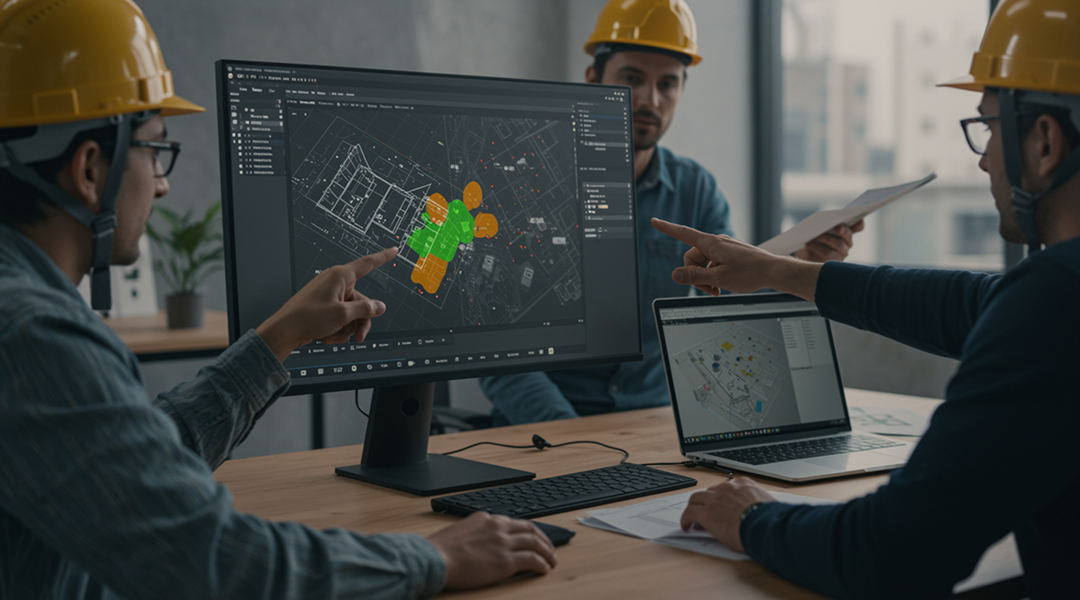
Before work begins, BIM supports the simulation of construction conditions. Teams evaluate the feasibility of installation, access paths, sequencing, and material placement, confirming practical buildability. BIM experts offer key insights to help identify challenges that are not common across traditional plans. These perks highlight the importance of early-stage BIM coordination, as addressing construction issues sooner reduces risks that might surface later.
These reviews highlight challenges early for proactive mitigation:
● Review sequences
● Validate logistics
● Optimize methods
● Identify risks
Result: Constructability reviews reduce the risk of onsite issues and unwanted RFIs and change orders by confirming practical designs before field execution.
Model-based quantity takeoffs offer accurate measurements, reducing errors common in manual estimation. BIM-based cost insights support budgeting and limit financial discrepancies during construction. BIM services manage quantification workflows that enhance accuracy and cost predictions.
This ensures to offer:
● Reliable quantities
● Fewer mistakes
● Better budgeting
● Predictable planning
Result: Accurate quantities reduce cost-related change orders and eliminate RFIs stemming from unclear material data, supporting financial stability and ensuring seamless project delivery.
BIM ensures that design updates, revisions, and changes are all automatically reflected across the whole model and associated documents. This prevents confusion among teams working from different versions. BIM experts maintain version control and ensure that documentation is accurate at each stage.
Automated updates improve precision and reduce confusion:
● Version control
● Consistent data
● Reduced errors
● Updated drawings
Result: Clear documentation helps BIM coordination improve project efficiency and reduce costs.
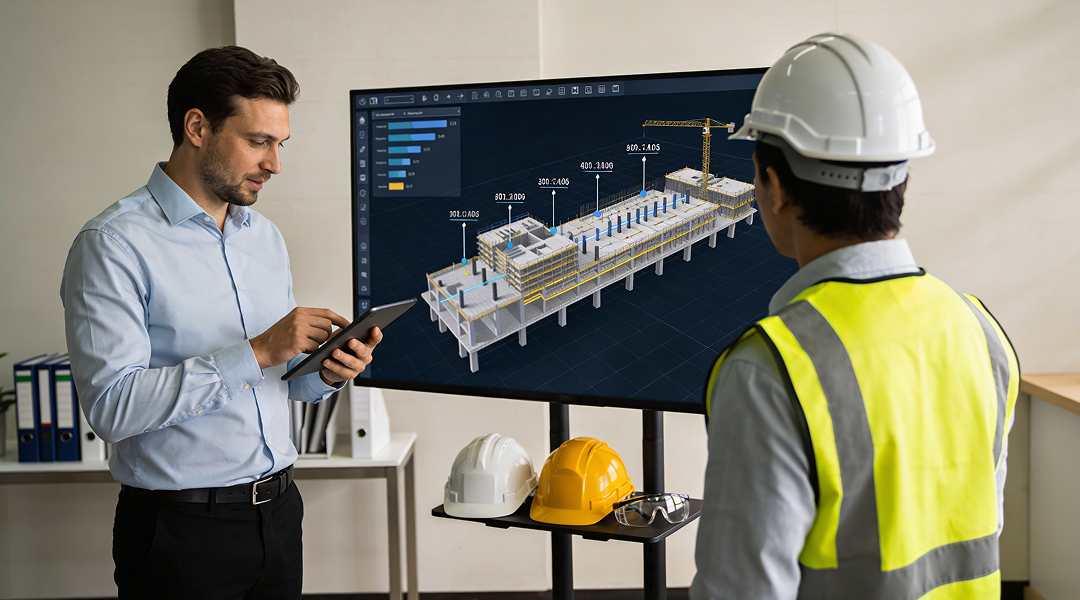
BIM coordination is important to make all disciplines present accurate information in the project.
Formulate standard modeling rules, naming conventions, and policies. Be consistent among the team members so that results are accurate and consistent.
General frequent review of models, future issues, and design conformity. Facilitate teamwork by sharing coordination concerns.
Install general applications of the real-time accessibility of BIM models and updates. Give the team the authority to work in harmony without making delays or gaps between stylistic communications.
Assign experienced BIM coordinators and managers. Maintain accountability by involving experts to monitor model and process quality and to support multidisciplinary coordination.
Review models to identify faults early and confirm the design's precision. Enhance a project overall through regular review and revision.
BIM coordination enhances communication, minimizes errors, and facilitates project delivery. It helps the team work effectively and prevent unnecessary rework. With any shift in construction towards a more intelligent digital activity, a powerful coordination process is necessary to achieve consistent results.
At Modelo Tech Studio, we offer feasible support in terms of BIM and offer a clear roadmap to improve project performance. Contact us today to see how we can strengthen your BIM coordination needs!

Curious to dive deeper into BIM practices? Check out our related blog posts for more insights and strategies to elevate your projects!


.png)
We appreciate your interest in our services. To provide you with an accurate and comprehensive quote, we will need some general information about your project. This will help us understand your specific needs and tailor our proposal to meet your requirements effectively.
.png)