

The constant changes happening around commercial construction demand faster decisions, clear coordination, and higher levels of accuracy at every stage. Technology equips teams to plan and deliver functional spaces for both tenants and businesses. Introduction of BIM in modern construction brings clarity and improves workflow efficiency, while helping stakeholders visualize outcomes with confidence. In our post today, we are going to discuss how digital modeling can help transform the entire modern building process and highlight the evolving role of BIM in commercial construction.
BIM processes create digital models representing every building element. It supports construction planning, designing, coordination, and project execution. Teams implement BIM to view 3D elements, evaluate performance, and resolve conflicts right before construction starts.
The structured data environment created through BIM keeps project data connected and updated to help decisions stay clear throughout the construction timeline. The perks are considerably visible with the use of BIM for commercial projects.
BIM for tenant fit-outs uses extensive digital building models for planning and designing customized interior spaces with higher levels of accuracy. The model showcases the structural components, mechanical systems, and layout requirements to help teams explore every detail before the actual construction starts.
This amount of clarity supports better decisions, eliminates uncertainties, and enhances project coordination. BIM for tenant fit-outs ensures that the space aligns effortlessly with the existing building, allowing efficient installations and predictable project outcomes.

Projects depend on static drawings, leading to confusion during any changes or updates, slowing down team communications.
Collaboration among architects, engineers, and contractors is improved through real-time updates. Construction coordination improves further with the help of BIM experts who resolve issues right before construction work starts on-site.
Precision-driven virtual models detect possible issues sooner to prevent unwanted changes, reworks, and delays during actual construction work.
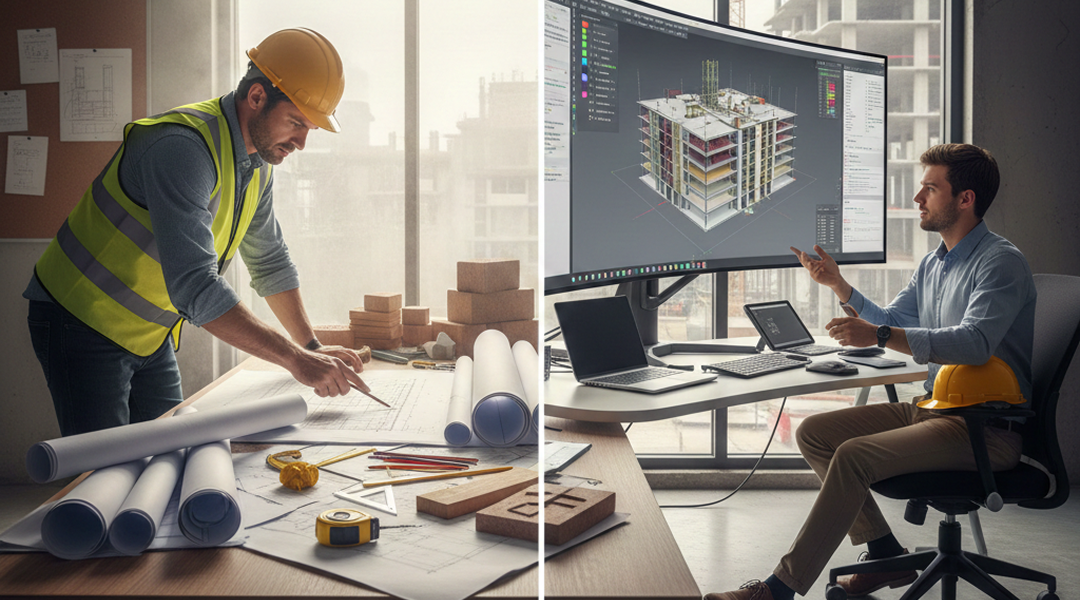
The projects today benefit greatly from digital tools that support planning and coordination. In the following section, we are going to discuss how BIM supports productivity, accuracy, and long-term value during construction.
Everything about space requirements is clear to the teams with the help of precision modeling that eliminates confusion or scope for inconsistencies. Project designers use BIM for validating alignment between architectural intent and real-world conditions, supporting better decision-making.
The amount of precision reduces any need for rework during construction execution and improves the project's technical requirements. It is beneficial for stakeholders that streamlined coordination leads to reliable specifications, mainly when teams depend on BIM for improved collaboration. This adds to the project clarity, supporting better-aligned decisions across all construction stages.
BIM helps to identify the construction issues sooner than traditional workflows. It helps in accelerating project planning and construction execution. Automatic updates help teams adjust designs quickly, avoiding delays. Visual coordination reduces approval cycles since both clients and contractors have a clear idea about the proposed designs.
Faster decision-making supports the timely execution of the project and the optimization of development stages. Contractors mainly depend on scan-to-BIM services to improve data accuracy and eliminate information gaps.
Integrated digital models generate dependable estimates of quantity and material predictions for enhanced budget planning. Teams evaluate cost impacts before implementing design changes, preventing overspending, which is often caused by inaccurate calculations.
Thorough insights help contractors select efficient construction methods and schedule purchases. Cost control is better when multiple scenarios are evaluated throughout the construction project, reducing any sudden expenses.
Centralized project data helps AEC (architecture, engineering, and construction) teams to work using shared data. Everyone evaluates similar models supporting instant updates and preventing misunderstandings. Clean environments make tracking progress easier and allow for adjustments to plans accordingly.
Team collaboration is enhanced with real-time communication connecting the complete project team since BIM coordination ensures a consistent flow of information, keeping every stakeholder aligned throughout the design and construction stages.
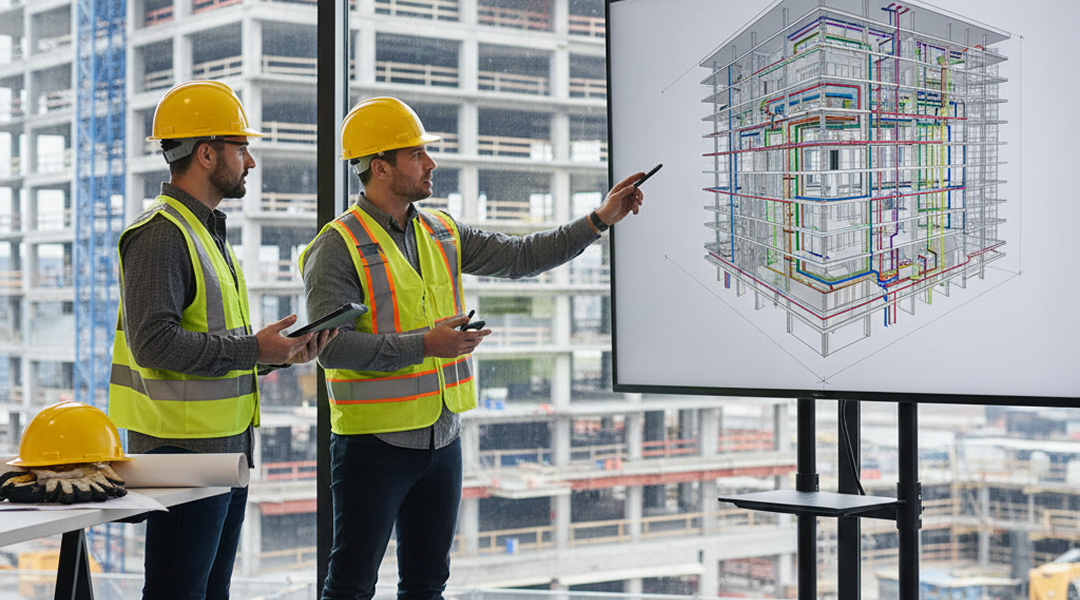
Tenant improvements need clarity and flexibility since every space needs customization. BIM helps with effortless project planning and execution, reducing errors or delays during every fit-out activity.
Teams can create detailed 3D layouts to help businesses know exactly how their space will function and appear. Visual clarity simplifies decision-making, reducing uncertainties during the design transitions.
BIM helps with scenario testing, allowing teams to adjust layouts based on functional needs. Approvals are faster since stakeholders can explore several design options without waiting for any physical mockups.
Commercial buildings consist of complex mechanical, electrical, and plumbing systems. BIM identifies hidden conflicts between new installations and existing conditions, preventing costly rework on-site adjustments. Proactive coordination safeguards construction timelines and tenant requirements.
Integrated modeling ensures that each fitting component aligns with the building's structure, helping teams avoid mistakes that often surface later during construction. Better predictability improves project stability, as clash detection to avoid rework helps eliminate errors before work begins.
BIM equips teams to position furniture, equipment, and fixtures with greater accuracy, supporting a functional layout aligned with workflow needs. Precision modeling helps tenants visualize the operational spaces and adjust placements before installations. Designers can verify the spatial requirements for circulation and better accessibility.
Project clarity leads to better installations and fewer redesigns during the later stages of construction. Professional guidance offered by the BIM consulting services strengthens decision-making, improving the overall spatial accuracy.
Well-planned construction needs smart tools simplifying decision-making and increasing the built quality. BIM supports modern businesses with clear insights and stronger coordination throughout commercial projects and tenant enhancements.
At Modelo Tech Studio, we offer logical solutions to help construction firms adapt to digital modeling with efficiency and confidence. We offer a well-connected project lifecycle with our expert support guiding different stages of development. Contact us today to explore how we can help with your next project and benefit from advanced digital modeling.
Curious to dive deeper into BIM practices? Check out our related blog posts for more insights and strategies to elevate your projects!


.png)
We appreciate your interest in our services. To provide you with an accurate and comprehensive quote, we will need some general information about your project. This will help us understand your specific needs and tailor our proposal to meet your requirements effectively.
.png)

