

Key outcomes (for owners, contractors, and trades): Early clash detection, enhanced constructability and construction sequencing review, faster decision-making through 3D visualization, model-driven drawing production, greater ability to optimize, and a controlled collaboration environment that reduced rework risk across many disciplines and vendors.
Project Overview
The Site C Clean Energy Project in British Columbia is one of the largest and most complex infrastructure projects ever built in Canada. The $16 billion hydroelectric development provides between 1,100 to 1,230 MW (megawatts) of capacity and integrates architectural, civil, structural, mechanical, and electrical systems at a massive scale.
At that scale and level of integration, traditional coordination just doesn’t cut it. You need a system that keeps everyone aligned, working from the same information, and making decisions with confidence. That’s where BIM came in for Site C.

Site C – Clean Energy Project – Image 1 – Federated BIM model of the generating station & spillway overlaid with a site photo.
The Challenge
At the beginning, the project was being developed mostly in a traditional 2D AutoCAD environment. It was organized and structured, but that approach can only go so far. On a project this large, it quickly became clear that 2D alone wasn’t enough to properly coordinate and fully optimize the project. As more consultants and disciplines got involved, things naturally became more complex. Different teams were using different tools, working in their own ways, and producing information that didn’t always line up. Even with a solid 2D process, there just wasn’t enough ability to visualize integration across disciplines to catch issues early, before they are built on site. That’s where problems can start to build. Clashes between systems aren’t always obvious until much later, and by then they’re expensive and time-consuming to fix. On most projects and more so on complex projects like Site C, that could mean delays, rework, and unnecessary costs. The challenge was simple in theory but not in execution: move from a traditional 2D process into a fully integrated and coordinated BIM environment that could handle the scale and complexity of the project.

Site C – Clean Energy Project – Image 2 – Excerpt from a construction drawing produced directly from the Revit model, showing modeled concrete lift outlines and waterstop placement. This information was generated from the model rather than manually drafted. During the design phase, over 8,000 concrete lifts and 4,000+ meters of waterstops were modeled.
The shift toward BIM on the project began around 2014, at a time when the industry was still evolving in terms of how these tools were applied at scale. There were no hydroelectric dam projects of this size or complexity that had been fully developed in Revit, which meant there was no clear roadmap to follow. The team had to establish standards, workflows, and best practices in real time, effectively building the BIM framework from the ground up while the project was already moving forward.

Site C – Clean Energy Project – Image 3 – Modelo Tech Studio Team on a visit to Site C to hold ACC and Navisworks Training Sessions for Construction Management Staff (2022)
At the same time, resourcing became a major challenge. The demand for BIM and 3D modeling expertise was growing rapidly, while the pool of experienced BIM professionals capable of supporting a project of this scale remained limited. Rather than relying solely on a small number of specialized modelers, the project team developed a structured production workflow that integrated experienced 2D drafting personnel into the BIM environment.
This approach allowed valuable hydroelectric project knowledge already present within the workforce to be retained while gradually transitioning teams into model-based delivery. Through targeted training, controlled workflows, and clearly defined production roles, traditional drafting teams were able to support model-based drawing production and documentation in a scalable and efficient manner. This became a key factor in expanding production capacity while maintaining quality and consistency across the project.
Another major challenge was maintaining consistency across multiple teams working from different offices and locations over a project duration exceeding 12 years. Managing a BIM environment at this scale required strict governance around software versions, model coordination, file structure, and data management workflows.
To support this, controlled versioning and synchronized software update protocols were implemented across all participating teams. This helped maintain model stability, minimize compatibility issues, and reduce the risk of file corruption across a highly interconnected modeling environment. Over the course of approximately 165 active models and four major Revit platform upgrades, the project maintained a stable and coordinated BIM ecosystem that supported continuous collaboration across all disciplines.
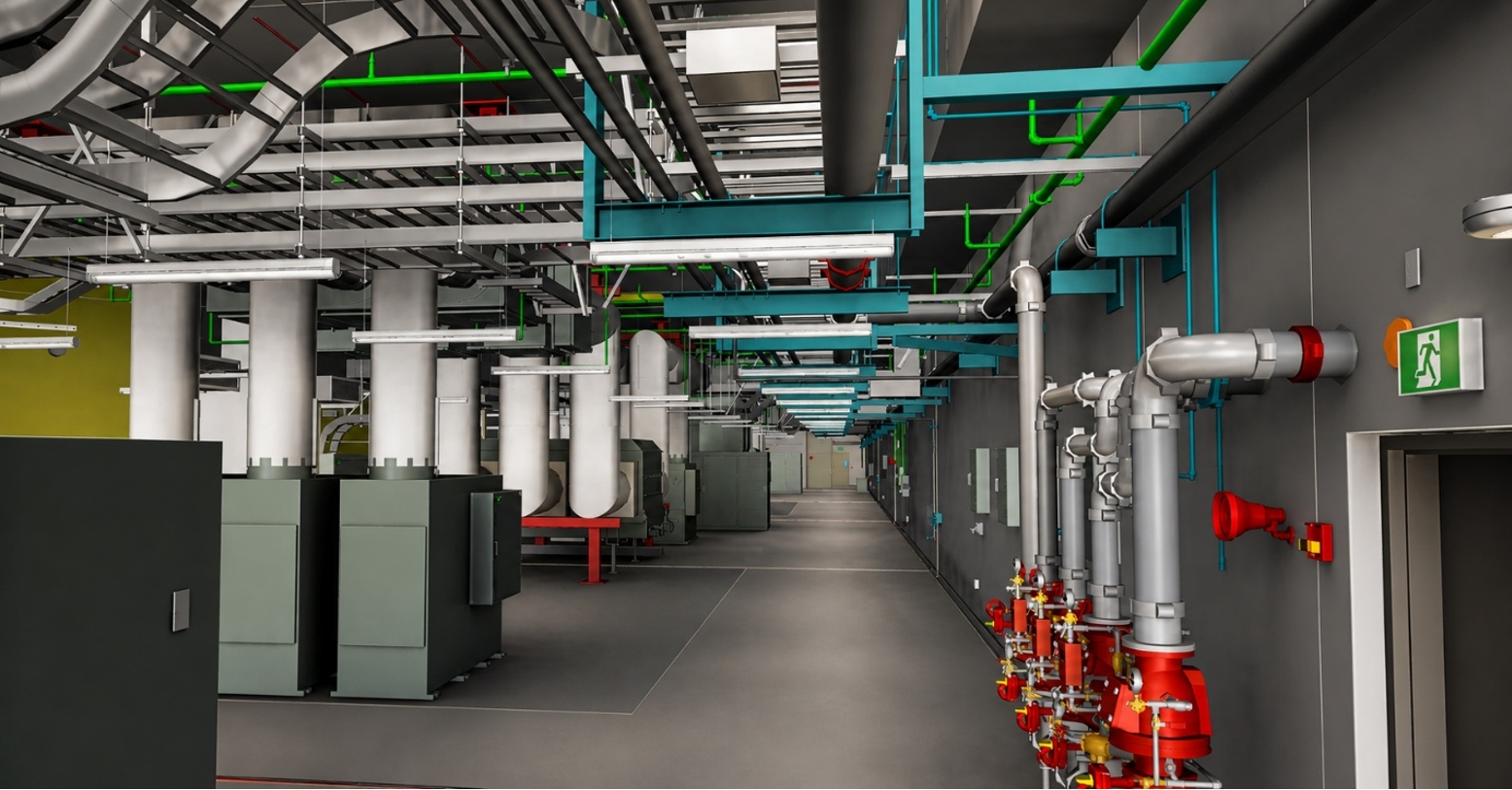
Site C – Clean Energy Project – Image 4 – Powerhouse generator floor corridor highlighting a fully coordinated BIM environment with integrated building systems.
The Solution
We implemented an evolving BIM and VDC strategy early in the project and carried it through design, procurement, construction, and into record issuance and project completion. The approach adapted as the project progressed, with a strong focus on building a structured, scalable system that could support the size, complexity, and number of stakeholders involved.
The first step was developing a BIM Execution plan and establishing clear standards, process, and governance. We developed model and drawing templates, defined workflows, and worked closely with all teams to align on how models should be built, managed, and used. That level of consistency was critical. Credit to our Client BC Hydro for strongly supporting BIM compliance across the project, as that top-down commitment played a major role in ensuring alignment across all parties.
To address the significant staffing challenges at the time, we developed a structured workforce approach built around two key roles: 3D Modelers and Annotators. 3D Modelers focused strictly on building and managing accurate, high-quality models, while Annotators worked within a controlled environment to produce drawings and documentation from those models. This allowed highly experienced 2D drafters to remain productive and contribute meaningfully without requiring full BIM proficiency from day one. It not only improved efficiency and scalability but also reduced the risk of errors in the model caused by inconsistent software knowledge.
This approach was supported by a carefully designed file structure. Revit working files (child models) were used strictly for 3D modeling, while Revit host files (parent files) were used to link all discipline models together and generate drawings. This separation created a stable environment for both modeling and documentation, reduced file complexity, and minimized the risk of corruption or performance issues within the core model files.
Given the number of teams and offices involved, strict control over software versions and updates was also essential. We implemented synchronized software update protocols to ensure all teams were working on consistent versions and builds. This significantly reduced compatibility issues and helped protect model integrity. Over the course of more than 12 years and 165 models, only a small number experienced corruption, demonstrating the effectiveness of this controlled approach in a complex environment.
From there, and following open BIM Practices, we brought together models from a wide range of platforms, including Revit, Tekla, Inventor, Advance Steel, Catia, Solid Edge, SolidWorks, Civil 3D, and AutoCAD. Each discipline maintained ownership of their own model, but all were integrated into a federated model environment. This created a single, coordinated source of truth without forcing all teams into one platform.
We used Autodesk Construction Cloud to host and manage the project in a centralized cloud environment, allowing teams to collaborate in real time, track issues, and stay aligned regardless of location. In May 2018, just one month after Autodesk BIM 360 was officially released, the Site C Clean Energy Project became one of the largest infrastructure projects to be onboarded onto the platform. This marked a major shift from a closed network and SharePoint-based file sharing to a fully cloud-based collaboration environment. The value of this transition became even more evident during COVID, when teams were required to work remotely while maintaining a full collaborative environment.
For coordination, we relied heavily on Autodesk Navisworks, running regular coordination meetings to identify and resolve issues early. These reviews went beyond traditional clash detection and included validation of access, constructability, safety, maintainability/operability, and overall system interaction. This allowed teams to better understand how systems would function in the real world, not just how they fit together geometrically.
We also integrated as-built LiDAR data from site to validate models against actual conditions. This ensured that the digital model remained aligned with field reality, adding another layer of accuracy and confidence to the coordination process.

Site C – Clean Energy Project – Image 5 – LiDAR scan data of the Powerhouse Operations Building used to compare as-built conditions against the as-modeled environment for validation and quality assurance.
To maintain alignment across all disciplines, and Up-to-date Navisworks model for general visualization, a total of 165 models were exported and reviewed on a weekly basis. These coordinated outputs allowed the design team to verify progress, review markups, and confirm that design intent was being properly implemented. This created a continuous feedback loop that supported accountability and steady progress across all teams.
Instead of reacting to issues during construction, problems were identified and resolved in the model well in advance, avoiding physical construction of errors, reducing rework, minimizing delays, and improving overall project efficiency.
Beyond coordination, BIM became the backbone of project delivery. Construction drawings were generated directly from the model, making it the single source of truth. Because drawings were driven by model geometry, any update was automatically reflected across all drawings and disciplines. This eliminated the need for parallel 2D drafting workflows and ensured that all teams were always working from the most current and accurate information.
This integrated approach supported a wide range of downstream uses, including quantity take-offs, design validation, 4D planning, installation tracking, payment validation, as-built verification, operations/maintenance visualization, and asset data management. BIM was not just a design tool on this project, it became a core part of how the project was planned, coordinated, and delivered from start to finish.
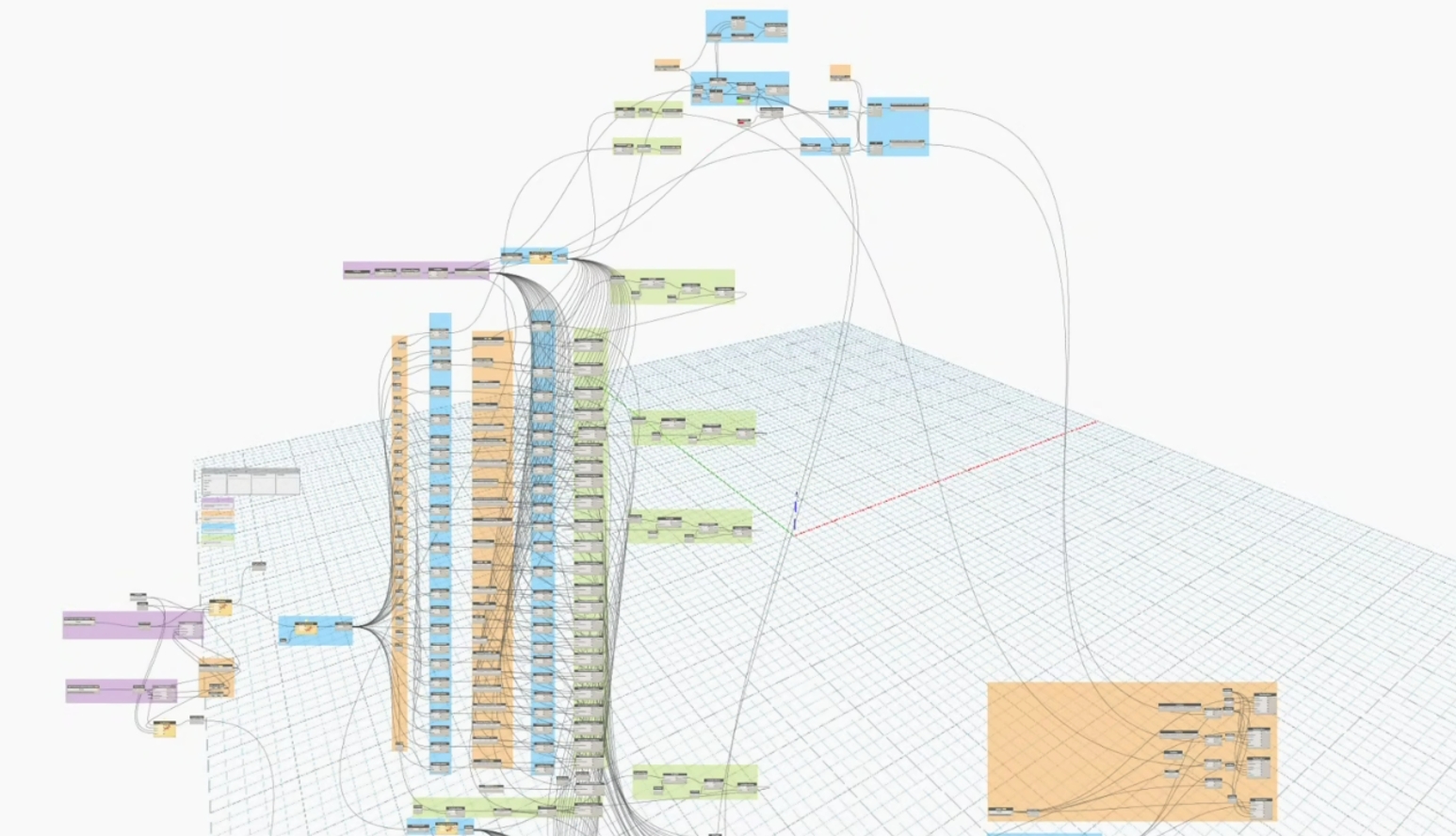
Site C – Clean Energy Project – Image 6 – Dynamo was used to synchronize the master equipment list and associated asset data across multiple models. This allowed the engineering team to manage and maintain data directly within the source environment, helping reduce manual transfer errors and improve consistency across the project.
Scale of Implementation
This wasn’t a small BIM setup; it was a full enterprise-level implementation.
We coordinated 165 discipline working models, supported by more than 70 host models used for drawing production. The team generated thousands of drawings directly from the 3D models. We also integrated fabrication and vendor models, bringing together input from more than 40 different companies.
At that scale, coordination either breaks down, or it becomes a major advantage. In this case, it became a strength.
Results and Impact
The results were very real and felt across the entire project.
By catching clashes early, we avoided major issues before they reached the field, reducing rework and saving both time and money. Beyond hard clashes, the models also helped teams better understand equipment access, construction sequencing, operational workflows, and safety considerations. This allowed potential challenges to be identified and addressed well in advance.
The process also improved the efficiency and development of all construction documents, thanks to the parametric nature of Revit that allowed for updates to be carried out once and replicate across all drawing packages.
Coordination and collaboration between teams improved significantly, creating a more aligned and proactive working environment. As a result, construction sequencing became smoother, schedules more predictable, and overall project execution more efficient.
During procurement, bidders were given access to the coordinated models. That gave them a much clearer understanding of what they were pricing. Instead of working off assumptions, they could see the project, understand constraints, and plan properly. That led to more accurate bids and fewer surprises later.
Another big win was visualization. Using 3D tools, and even virtual reality in some cases, we were able to walk stakeholders through the design. People didn’t have to interpret drawings or guess how things would come together, they could see it directly. That made decision-making faster and reduced misunderstandings significantly.
At the same time, automation and model-based workflows cut down on manual work. Repetitive modelling tasks were streamlined, and asset data was directly integrated into the model, allowing for more efficient data management and extraction without the need for manual input or duplication.
This meant teams spent less time recreating information, chasing updates, or fixing inconsistencies, and more time focusing on coordination, decision-making, and moving the project forward. The result was a more efficient workflow, with better quality information being produced in less time.
Why This Matters
On complex projects, delivery risk usually comes from misalignment between disciplines, contractors, and site conditions, not from any single drawing. When that gap shows up late, it becomes RFIs, change orders, physical clashes constructed on site, rework, and schedule pressure.
Full adoption of BIM, when paired with clear standards and governance, works as a practical delivery system: a shared source of truth that designers, owners, construction managers, contractors, and trades can coordinate from using the same information, at the same time.
For teams in the field and in the office, the payoff is predictability: fewer surprises during installation, better schedule confidence, clearer procurement scope, and more reliable record information at handover.

Site C – Clean Energy Project – Image 7 –3D Model Render of Unit 6 (Left) Site Photo of Unit 6 during Construction (Right)
Our Approach
Modelo Tech Studio supports BIM/VDC execution from kickoff through project closeout. We help define the BIM execution plan, establish project standards (templates, naming, coordinates, LOD (Level of Detail/Development), issue workflows, and asset data collection protocols for asset lifecycle management), and set up the collaboration environment so every party understands how to contribute and how information will be consumed downstream.
We then run coordination and model management in a consistent cadence: federating models, performing QA/QC, facilitating clash and constructability reviews, and producing outputs teams can build from, including drawing sets, quantities, coordination packages, and structured asset data for operations and maintenance teams. When needed, we integrate field reality through scan/LiDAR validation and support record-model readiness for turnover, helping ensure the final deliverables are usable not only for construction, but also for long-term Facilities Management and asset lifecycle management.
Looking For BIM/VDC Expertise?
If you’re planning a complex project and want to avoid rework, delays, and misalignment between teams, BIM needs to be part of the strategy early.
The earlier it’s implemented, the more value it brings.
If your goal is to reduce risk and keep your project on track, it’s worth having a conversation about how BIM can start saving you money before construction even begins
Contact us at info@modelotechstudio.com for more information.
Curious to dive deeper into BIM practices? Check out our related blog posts for more insights and strategies to elevate your projects!


.png)
We appreciate your interest in our services. To provide you with an accurate and comprehensive quote, we will need some general information about your project. This will help us understand your specific needs and tailor our proposal to meet your requirements effectively.
.png)

